
Stay Strong and Fit with Water Aerobics After 60
If you’re over 60 and thinking about getting back into exercise, you may want to check out water aerobics.
It may sound unconventional, maybe a little scary—or silly —but stick with me here, and you could be really surprised by all the benefits it offers.
When I first thought about starting a swim program, I wasn’t sure if I belonged in the pool at all.
But let me tell you something: the water has a way of surprising you.
Years ago, water aerobics became popular for treating an injury. I will admit that at that time, as an orthopedic nurse, I had reservations.
However, after years of watching people become stronger without increased pain while doing pool exercises, I became a believer.
I found that water aerobics increases strength, flexibility, and cardiovascular fitness while being easy on your joints.
The water holds you up, takes pressure off your joints, and lets you move without everything hurting.
So, it makes it a great exercise option for anyone looking to get stronger and maintain or regain mobility.
This post contains affiliate links. If you make a purchase using my link, I may earn a commission at no extra cost to you.
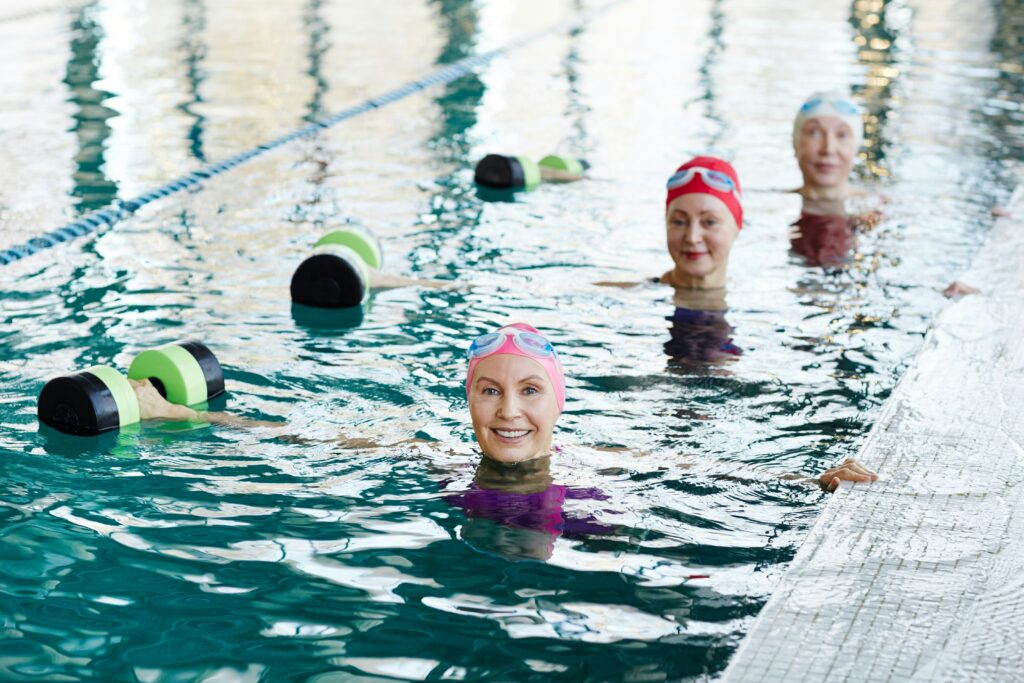
What Is Water Aerobics?
Water aerobics is like a secret workout designed as fun!
It isn’t just doing laps like Olympic athletes.
You can get stronger just by walking through the water, since it provides resistance.
Water aerobics involves doing exercises in shallow or deep water, like gentle kicking with a kickboard or the edge of the pool, practicing simple swim strokes, and maybe even floating on your back.
It could also include some of your favorite land exercises, with a twist — water resistance.
Water aerobics can be done with just body weight or with equipment like foam water weights, kickboards or noodles, water resistance hand weights, or ankle or jogging weights.
The buoyancy of water decreases the impact on joints, making it perfect for people of any fitness level.
What Are The Benefits of Water Aerobic Classes?
There are several great benefits of water aerobics.
First and foremost, it’s easy on the joints, which makes it perfect for any of us with arthritis or joint pain.
Then, there is the resistance of the water, which helps build muscles.
You can do exercises in the water that might be hard for you to do on land, which makes it more comfortable and keeps you coming back for more!
Water aerobics is also good for your heart health. It gets your heart beating faster without putting too much stress on your body.
Regular water aerobics can build muscle strength, making you stronger and giving you more energy to get more done in your day.
This activity is also great for toning your muscles. When you move in the water, your muscles have to work hard. This can improve muscle mass and give you more confidence.
Water aerobics also helps with balance and coordination. Being in the water challenges your body to stay steady while moving, which can help you balance better on land.
Water Aerobics Equipment for Safety and Performance
It’s important to have the right gear to stay safe while doing water aerobics.
These are the things you may need:
1. Water Shoes: Shoes with a good grip and a non-slip sole to keep you from slipping and protect your feet from sharp things.
2. Floatation Devices: These can help you stay balanced and afloat, which is good for beginners. Usually, these are provided by the facility that offers classes.
3. Water Dumbbells: These special water weights make your workout harder, so you get stronger. Most facilities that offer water aerobics have these, but if not, you can invest in foam weights or hydro weights for more resistance.
4. A Swimsuit: Pick one that fits well and lets you move.
Don’t forget to bring a towel and a water bottle to stay hydrated!
Water Aerobic Exercises
Here are some of my favorite moves.
You can put them all together for a full-body workout or just pick a few to start.
Core Exercises
Core exercises work to improve stability and strength in the abdominal muscles and lower back.
Here are a few options:
Aqua Jogging:
Basically, you just jog in place while lifting your knees high. You don’t have to literally jog, just go at your own pace.
Doing this in the water turns a high-impact exercise into a low-impact exercise, giving your joints a break.
It helps engage your core muscles while keeping your heart rate up.
Side-to-Side Leg Lifts
Start at the edge of the pool, where you can hold onto the side.
You may want to do this in the shallow end of the pool.
Begin by lifting one leg to the side, then lower it and repeat on the other leg.
Continue alternating legs.
If you can do this without holding on to the side – go for it! It’s a great way to work on balance.
Water Twists:
This exercise is the best way to work your obliques and spine.
To do this exercise, stand with your feet shoulder-width apart.
Gently twist your torso side to side while keeping your hips stable.
Lower Body Exercises
Lower-body exercises target the legs and improve leg muscle strength.
Aqua Squat:
Start by squatting with your knees out and your chest up, then lift back to standing.
Repeat 10-12 times.
This works your thighs and glutes.
Heel-to-Toe Walk:
Moving forward in the water while placing the heel in front of the toe creates resistance, helping improve balance and coordination.
Calf Raises:
While standing in water, lift your heels off the ground and stand on your toes.
This movement helps improve calf strength and stability.
Flutter kicks:
For this one, you can either use the side of the pool or grab a foam kickboard.
Hold on to the side of the pool or the board while lifting your legs up behind you.
Begin flutter kicking your legs up and down.
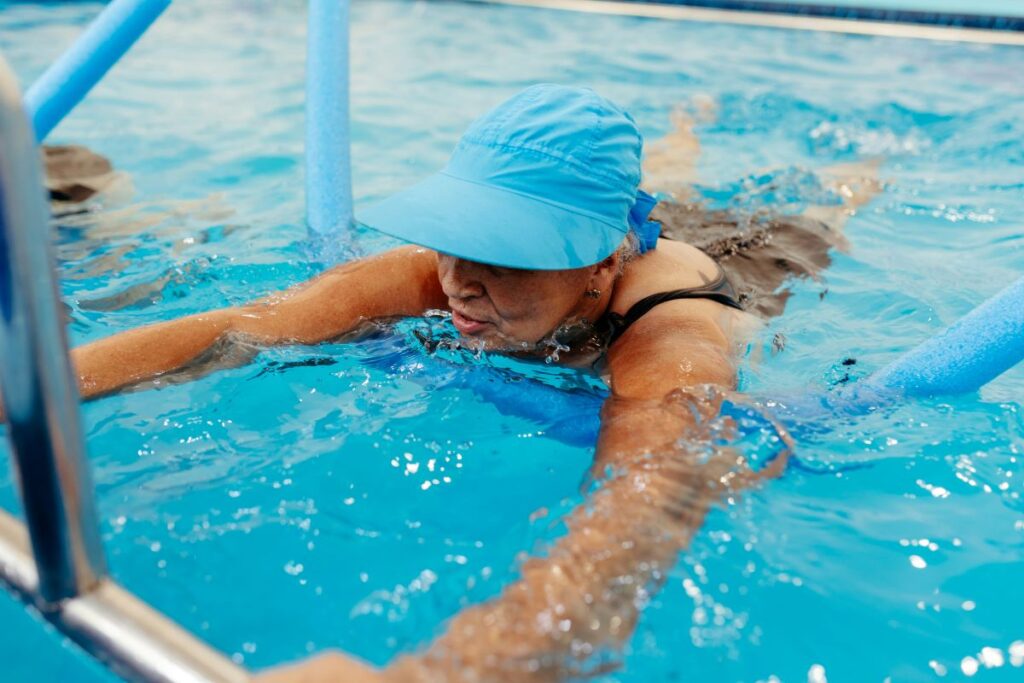
Upper Body
Focusing on the upper body can help improve your arms and shoulder strength without using heavy weights.
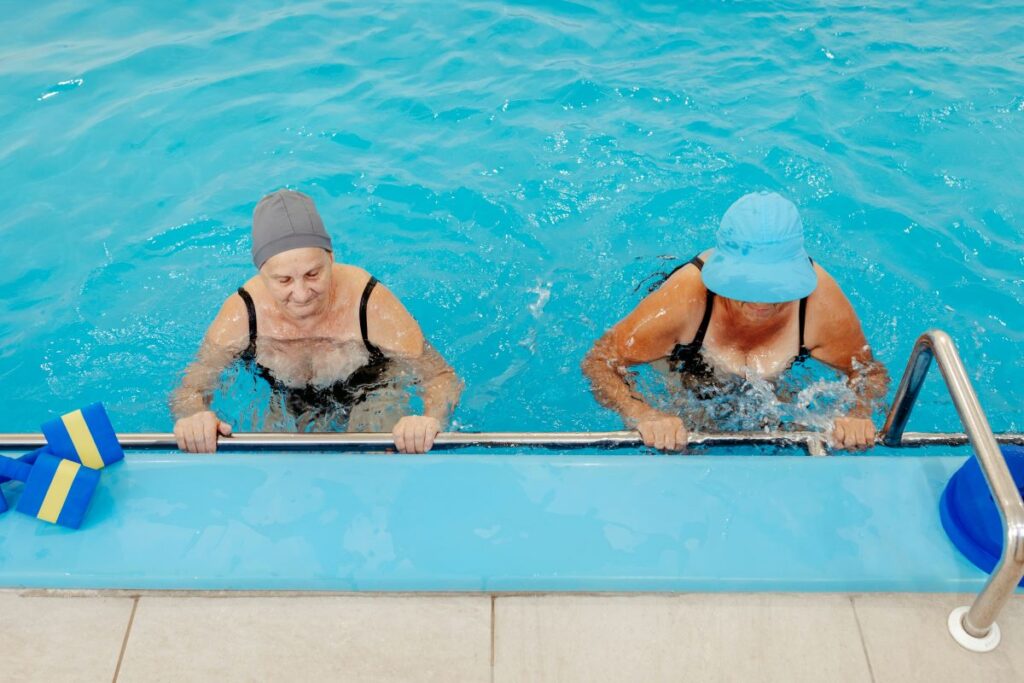
Water Push-Up:
Begin standing at the side of the pool.
Place your hands on the pool edge.
Push the arms back until they are fully extended, then return your upper body to the pool edge.
This works your chest and arms.
Aqua Resistance Band:
Grab a resistance band and anchor it at the pool wall.
Begin pulling it back towards your chest in a controlled manner.
This is great for improving upper back, chest, and arm strength.
Arm Circles:
Start in deeper water.
With arms extended to the side at shoulder height, start drawing small circles in the water.
It’s like drawing in the air, but with the water’s resistance.
For more resistance, you can grab some foam weights or hand-resistance weights.
Chest Fly:
While still in deeper water, push one or both arms in front of your body at chest level, then slowly return them to your sides.
This works both the chest, back and shoulders.
Again, you can add resistance with foam or hand-resistance weights.
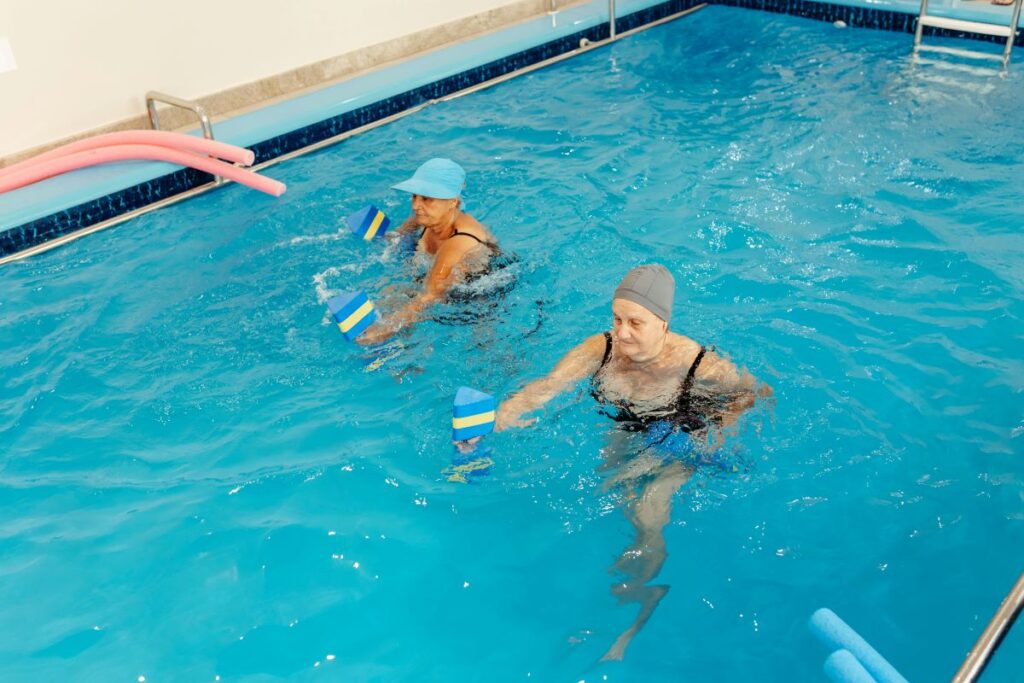
Bicep Arm Curls:
Stay in the deeper water for this one.
Begin with your arms by your side.
While keeping your upper arms against your sides, bend your elbows and bring your hands to your chest.
Lower back to the starting position and repeat.
Add resistance by using foam weights or hand-resistance weights.
Aqua Endurance Drills
Aqua endurance drills are cardio exercises that improve fitness levels and improve stamina.
Continuous Water Walking:
Walking briskly from one end of the pool to the other for several minutes can really get your heart pumping!
Water Kickboard:
Holding onto a kickboard while kicking legs forward for distance builds stamina.
It’s a playful way to get a workout!
Starting a Water Aerobics Exercise Routine
Starting a water aerobics routine can be simple and fun.
It can also kick your butt!
You can do this on your own or in a group setting. The choice is up to you.
Whether you take a class or do it yourself, always begin with a warm-up to prepare the body for movement.
Be sure to wear a comfortable swimsuit and water shoes for added support and safety. Staying hydrated is super important, even in the water.
If you’re new to swimming—or coming back after a long break—start small.
Try something like:
- 2–3 days a week
- 20–30 minutes at first
- a mix of walking, kicking, and easy strokes
As you get stronger, you can add more time or try new moves.
Just don’t stop!
The goal isn’t to be the best swimmer in the pool.
The goal is to feel better, move easier, and enjoy your body again.
So, Why Start Water Aerobics?
Here’s the truth: getting older doesn’t mean you stop being strong. It doesn’t mean you stop learning new things.
And it definitely doesn’t mean you stop taking care of yourself.
Water therapy has many great benefits, including a low risk of injury, improved cardiovascular health, and mental and emotional benefits.
From simple standing exercises to more challenging workouts, there is a water aerobics routine for every fitness level.
There’s a saying I love:
“You don’t stop exercising because you get old.
You get old because you stop exercising.”
So if you’re thinking about trying water aerobics, I say go for it.
You might just find that the water gives you back a piece of yourself you thought you lost.